About VirusHead

Interdisciplinary intellectual, contextual ethicist, discourse analyst, knowledge management advisor, technical documentation specialist, compassionate warrior, spiritual eclectic, ex-Jehovah's Witness, writer, poet, artist, singer, wife, lover, mom, sister, daughter, niece, cousin, dear friend, worthy adversary, and very talented loafer. And that doesn't say anything much at all, does it?

Them as You Speak – Hester Site


Once in a while, it’s good to go random, just to see what the cosmos throws at’cha when you ask. Here goes.

Your Debut Album

1 – Go to http://en.wikipedia.org/wiki/Special:Random
The first random Wikipedia article you get is the name of your band.

2 – Go to Random quotations: http://www.quotationspage.com/random.php3
The last four words of the very last quote of the page is the title of your first album.

3 – Go to flickr’s “explore the last seven days” http://www.flickr.com/explore/interesting/7days/
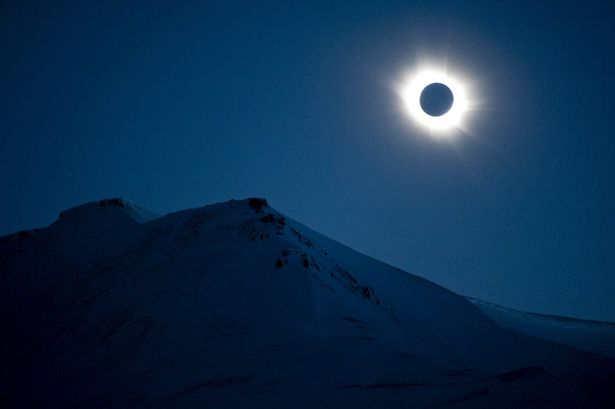
Third picture, no matter what it is, will be your album cover.

Put it all together, that’s your debut album.

Hester Site - Them as You Speak

Hester Site – Them as You Speak

Possible interpretive data:

Hester Site

The Hester Site was a major campsite used by Middle and Late Paleo-Indian and Early Archaic peoples between 9000 and 7000 B.C. The major activity at this site was the manufacture of chipped stone projectile points and tools for hunting and butchering of wild game. In the Early Archaic Period these site activities continued as stone tools used in wood working and processing of wild plant foods were added to the tool kit. Repeated annual occupations created intact stratified deposits which have proven of great significance in documenting stylistic changes in stone projectile points over time. These tools were the keys to understanding the chronology of Paleo-Indian and Early Archaic cultural periods over a large area of the Southeastern United States. The site has the potential to yield significant information on how and when the Southeast was settled, lithic technologies of the earliest cultures, and the chronology of distinctive tool types.

Hester Prynne is the protagonist of Nathaniel Hawthorne’s novel The Scarlet Letter. She is portrayed as a woman condemned by her Puritan neighbors. The character has been called “among the first and most important female protagonists in American literature.”

Them as You Speak

To sway an audience, you must watch them as you speak. ~ C. Kent Wright
Language most shews a man: Speak, that I may see thee.~Ben Jonson

Image of Desert Sands, Footprints

Only one set of footprints in the sand, not two. Note: This saccharine poem has always irritated me, but it’s the first thing I think of.

Free association –> solitary path, hermit, marks left behind, history, tracks, simplicity, retreat, danger, beauty, ancient, wandering, projections, spirit journey, the desert of the real, remains, scorpions, heat, vultures, white sage, fire, survival, reflection, stone, hieroglyphics.

Quotes that resonate:

“To the desert go prophets and hermits; through desert go pilgrims and exiles. Here the leaders of the great religions have sought the therapeutic and spiritual values of retreat, not to escape but to find reality.” ~ Paul Shepard, Man in the Landscape: A Historic View of the Esthetics of Nature

“A thousand fantasies / Begin to throng into my memory / Of calling shapes, and beckoning shadows dire, / And airy tongues, that syllable men’s names / On sands, and shores, and desert wildernesses.” ~ John Milton, Comus, A Mask

“Night poured over the desert. It came suddenly, in purple. In the clear air, the stars drilled down out of the sky, reminding any thoughtful watcher that it is in the deserts and high places that religions are generated. When men see nothing but bottomless infinity over their heads they have always had a driving and desperate urge to find someone to put in the way.” ~ Terry Pratchett, Jingo

“I have always loved the desert. One sits down on a desert sand dune, sees nothing, hears nothing. Yet through the silence something throbs, and gleams…” ~ Antoine de Saint-Exupéry, The Little Prince

“WIDE, the margin between carte blanche and the white page. Nevertheless it is not in the margin that you can find me, but in the yet whiter one that separates the word-strewn sheet from the transparent, the written page from the one to be written in the infinite space where the eye turns back to the eye, and the hand to the pen, where all we write is erased, even as you write it. For the book imperceptibly takes shape within the book we will never finish. There is my desert.” ~ Edmond Jabès

“Where is my oasis? Too far from
here for me to crawl with these
dead legs, refusing to co-operate
Hands and fingers clawing uselessly
through the grains of sand…”
~ Kiera Woodhull, Chaos of the Mind

“An afternoon drive from Los Angeles will take you up into the high mountains, where eagles circle above the forests and the cold blue lakes, or out over the Mojave Desert, with its weird vegetation and immense vistas. Not very far away are Death Valley, and Yosemite, and Sequoia Forest with its giant trees which were growing long before the Parthenon was built; they are the oldest living things in the world. One should visit such places often, and be conscious, in the midst of the city, of their surrounding presence. For this is the real nature of California and the secret of its fascination; this untamed, undomesticated, aloof, prehistoric landscape which relentlessly reminds the traveller of his human condition and the circumstances of his tenure upon the earth. “You are perfectly welcome,” it tells him, “during your short visit. Everything is at your disposal. Only, I must warn you, if things go wrong, don’t blame me. I accept no responsibility. I am not part of your neurosis. Don’t cry to me for safety. There is no home here. There is no security in your mansions or your fortresses, your family vaults or your banks or your double beds. Understand this fact, and you will be free. Accept it, and you will be happy.” ~ Christopher Isherwood, Exhumations

“Within minutes my 115-mile walk through the desert hills becomes a thing apart, a disjunct reality on the far side of a bottomless abyss, immediately beyond physical recollection. But it’s all still there in my heart and soul. The walk, the hills, the sky, the solitary pain and pleasure—they will grow larger, sweeter, lovelier in the days to come, like a treasure found and then, voluntarily, surrendered. Returned to the mountains with my blessing. It leaves a golden glowing on the mind.” ~ Edward Abbey, Beyond the Wall: Essays from the Outside

“Is it possible to write a poem or are these words just screams of outlaws exiled to the desert?” ~ Dejan Stojanovic, The Sun Watches the Sun

“She also told me it wore down her spirit to live in the desert landscape that was parched by midsummer, to plant a garden each spring and struggle to keep it alive past July.” ~ Ursula Hegi, Hotel of the Saints

“You have wakened not out of sleep, but into a prior dream, and that dream lies within another, and so on, to infinity, which is the number of grains of sand. The path that you are to take is endless, and you will die before you have truly awakened.” ~ Jorge Luis Borges

Rolling around again


The fact that I’ll be turning 49 on Monday has put me in a contemplative mood. As the years roll by a bit faster, it’s sometimes easy to miss changes. Whether they are changes in values, beliefs, habits, understandings, goals, or just almost unnoticeable drifts of daily life, the occasions for stopping to assess them just become fewer. No more big moves, no more graduations, no more births. You accommodate to the inevitable, and rise to unexpected challenges, and perhaps gain some insights if you’re curious and observant, but things seem to grey down a bit (to match the hair that now has to be artificially colored). Is there anything of particular note in the last year? At first, I didn’t think so, but then I started having thoughts.

A year ago, I was very frustrated and even sometimes angry about some interpersonal challenges. Those feelings have become much more infrequent, partly because I’ve learned how to disengage from attempted escalations about things that are really not very important. I’ve learned how to respond more neutrally when dealing with difficult people, and not to let someone else’s issues affect my whole day or even week.

The deeper understanding about boundaries of various kinds has greatly reduced my stress level, as well as putting me back on track with some of my talents and strengths. The way I was approaching my work day and the things that needed to be done just frankly took too much out of me (that’s improved too) without being angry and upset on top of it all. Last year, I felt like I was on the edge of some sort of major collapse. This year, I’m tired but I feel like I’m accomplishing much more during my work day, I don’t need to isolate myself so often or for so long, and what I think of as my recovery time has reduced somewhat.

I’ve been revisiting the topic of boundaries and friendships for a few years now, but there have been some positive shifts this year.

I’ve tended to be a fiercely loyal friend, but at the same time I’ve had a kind of economy of friendship in which things were very (almost mechanically) reciprocal. If I was being treated well, I would treat the other well. If objectionable behavior was expressed in my direction, I would hit back at just that level, plus one. Usually this took the form of a verbal response. What was really happening? I was hurt, because I considered myself a good and loyal friend, but I wouldn’t admit that hurt, so it turned into a defensive attack. Then, because I had some frustration and anger hanging around anyway, I took it as an opportunity to respond in just that way because… because… because I can. I’m good at it. Words rarely fail me, and I can rip back pretty effectively. Almost effortlessly, I point out flaws and unfairnesses and points of contention, at a pace (and with a passion) that be overwhelming to others. The behavior of the other person ended up not just triggering my defenses but also gave me an excuse to shine, to myself, just because the things I do best don’t really seem to be called for in most of my environments very often. So in addition to forgetting that this was a friend, and not an enemy, I was losing sight of the fact that it was even an individual. It didn’t really matter who I was talking to, because at some level I wasn’t even really talking to that person as a person. I was just letting loose in the space of words, where I feel most comfortable and at home.

I know this sounds like really basic stuff. I didn’t realize how ready I was to believe that defense/attack was required. I grew up largely distrustful of the world around me. I’m an introvert, and often socially uncomfortable in group situations, and there is a habitual feeling that I need to perform and be amusing so that people might not automatically just hate me. Most people who know me think I’m extroverted. I’m not. A nervous laugh, now toned down but still present, developed as a “please don’t hurt me” strategy when I was still very young. Giving anyone a chance to know very much about me, such that we could authentically become friends, or not, is challenging to me. I have a lot of masks, and I love to try them on. When someone actually gets through to me enough that they are able to offend, upset or hurt me, the second layer is that I’m ready to pounce. Like… immediately.

I’ve found a few real friends who model something different in the way they treat me. Because of this, I have realized how unfair it is to people I care about to have this attack mode as the default response when I feel attacked or hurt or upset by their behavior. There are other ways to respond, after all. A simple naming of how it looks to me, such as I would do in a less charged situation, is a far better option, and asking questions to try to understand what’s going on is usually very helpful. If I’m in a better space with myself, I can navigate through all kinds of difficult terrain, but there has to be a basic layer of trust, and I have to do better with remembering my caring toward the other even when I’m feeling disappointed or betrayed.

My reasons for becoming and staying friends with people has sometimes been far too mysterious; there have been too many circumstantial, historical friendships that I felt compelled to maintain long after their times were past. People with whom I really had very little in common other than similar experience of some kind, people who didn’t actually wish to see me thrive, people who demonized me because of political misinformation (or general misunderstanding), people who were attracted to interactions with me, but for reasons that seemed problematic – all of these were like healing projects for me. In some cases, I would feel a strange repulsion/attraction thing going on, and I would try to gradually erase the repulsion side, seeing it more as a problem with me (my critical side has fairly high standards sometimes) than the other person. After all, you create what there is in the “between.” I would know that something was wrong, something was off – maybe even something pathological – but couldn’t articulate to myself what it was. I would spend time and energy assessing, and then trying to “fix” whatever it was – a very Western view of relational ethics, but I’ve never really been that great at acceptance of all that is. Like the angel of history, I wanted to go back and repair the things that had been broken. I kept thinking that “the cosmos” (insert your belief language here) was trying to teach me a lesson. Maybe it was, but it wasn’t the lesson I thought.

Even radical acceptance of the other has to include the boundaries of self-love; you can accept them as they are, and still gauge the best distance at which to keep yourself. I fear I’m never going be able to offer unconditional love to very many people in my life, much less all humanity. Maybe this is a kind of giving up on that, too. The best I can do, and that only sometimes, is to feel genuine sadness about what I’m observing.

In the last year, really only the last year, I have learned how to allow myself to say “there are some major things about this person that I neither like nor respect, and all the positives that are there are not enough to outweigh this fact.” I don’t need to engage in the push me/pull you game, which always felt vaguely dangerous anyway. I can simply walk away, knowing that it’s too destructive or toxic for me, and maybe I don’t even need to know the reasons why.

I have hesitated to allow myself the power of real choice in this matter. Even after things that were fairly egregious, I would try to talk things through, get back to a good place. You don’t abandon your friends, right?

Now I can ask the essential questions of qualification, and still remain true to my ideals about friendship: “Are we actually friends, and if so, on what basis? Of what value is this?” I’m resolved to trust not only the available data, but also my own instincts. If I sense that this person really doesn’t actually like me or get me in any significant ways, seems threatened in some way by my existence, has some kind of agenda, or is really, truly (as Carlin pointed out), stupid, full of shit, nuts – or all three, then I have to trust myself enough to just step back (or back away slowly if needed). If I can formulate any questions to ask, I can do that, but it’s really not required – not if the instincts are strong and I can’t answer the friendship qualification questions affirmatively. I have always been so concerned that maybe I was just being paranoid or overly suspicious because of hard-wired or environmental influences that I sometimes overcompensated and stopped listening to myself. If I get too repeated flashing warning lights, I need to listen, and act accordingly. There is no ethical obligation to befriend anyone.

I value real and meaningful friendships, and you can’t force that. When I disagree with and argue with real friends, as I sometimes do, I’m at least as concerned about where they are as where I am, and the issues are (mostly, I hope) just the ones before us and not piled high and deep with unrelated dynamics.

There are all kinds of friendships. I also value friendships with a light touch, where there is enough common ground that we have fun and we don’t really need to know each other very fully to enjoy each other’s company and conversation. After all, how many true, deep friends has anyone got? Some overlapping interests and compatibilities will work just fine for socializing, communicating, and learning. It’s also part of the natural flow of things for friends to appear and fade through the different times and spaces of your life. It could even be that there’s nothing particularly wrong, but it’s just not a friendship I’m interested in cultivating anymore. No big deal. As one friend I’m very fond of says, “Whatevers.”

While it is true that even asshats can teach you lessons about relationships and boundaries and personal insights, it’s impossible to completely avoid them anyway, and there is no real reason to let them get close enough to be destructive or to drive you crazy. You can’t fix other people. What you can do is be as authentic as you can with the people you truly like and respect, and the effects of that are mutually beneficial.

Of course, I hold in reserve the smackdown ability for when it’s truly useful and needed, but I could and should channel more of that impulse into something more creative. That sort of thing has not only been a blind spot for me, but it’s also been so energy-wasting and disturbing in my life, now that I look back on it. I have a growing sense of the limitations of the time remaining. Another thing that has objectively changed this year is that our son is taller than me, and I wasn’t a young’un when I delivered him. I need to focus on more of the good parts of life.

Next year, it would be really lovely if I could report that I’ve found a lot more energy for everything I want to do, I’ve lost ten-fifteen more pounds, I can hit E above C again, I don’t even crave a cigarette, my novel is selling like hotcakes, my student loans have been paid off as a token gesture against my lottery winnings, and I’m living on the most beautiful island you’ve ever seen. This is in rough order of probability. I’m putting it all out there in case there’s anything to that set of beliefs around focused intention – from dumping it onto the gods/goddesses to lining up with the mild (or strident) forms of the “power of positive thinking.” I welcome gifts from the benevolents, as always, and I’m totally grateful, but you could maybe tone it down a little on the pranks this year (just a sweet suggestion, especially if you’re hankering for more sage and lavender this summer).

Maybe next year, a few more things will be better than they were before, and the changes might even be in a completely different register – all part of the lifelong journey for curious seekers.

Be well. Be strong. Be kind. Laugh every day. You can dance if you want to. If you need some perspective, revisit the wonder of the starry skies above.

“Stars” by The Weepies

Tangerines are hanging heavy, glowing marigolden hues
Teasing a half-pale moon
And I feel a pull to the blue-velvet dark and stars.
Stars. Stars.

Pink Magnolia, blushing and coy
Savors the sun while she shines
You’ve got yours and I’ve got mine
Together we glide through the blue-velvet dark and stars.
Stars. Stars.

All it takes is a little faith, and a lot of heart
Back and forth we ply these oars
They move in time and get entwined
Green with joy then gray with sorrow
Ripened fruit that falls tomorrow
Filling us with brilliance

Branches are bare with a pulse underneath
Flowering slowly inside
Your hands are warm and my body is wide
To hold all the promise of blue-velvet dark and stars

All it takes is a little faith and a lot of heart
Sweetheart

Please, J.K. Rowling, More Stories


The current Harry Potter moviefest that I’m enjoying with my son has inspired me to make a request of J.K. Rowling. I love these stores – we’ve read all the books multiple times – because they give me hope. It’s just that simple. They give me hope.

So, I navigated over to her website at http://www.jkrowling.com and – sure, why not? – clicked on the contact link.

The Blair Partnership represents J.K. Rowling internationally and across all media. Please direct any queries to info@theblairpartnership.com and a member of the team will be in touch directly. J.K. Rowling very rarely does interviews or public speaking, and when she does they are usually around a new project or charitable commitment. Please note that she does not undertake fee-paying public speaking engagements. Because of the huge volume of requests coming in, J.K. Rowling also regrets she is unable to…

Yada yada yada. Well, ok, fair enough. I sent the following email, but just in case there isn’t any analysis or reporting of the communications, I’m also posting it here. You never know, maybe they do some version of web analytics, social media harvest, or even a Net Promoter Score (put me in the “I would definitively recommend” bucket).

To Whom it May Concern:

I am aware that the illustrious J.K. Rowling could not possibly respond to the billions of her readers, but I am hoping that you maintain some sort of thematic statistics for her.

If so, may I add to the numbers of those who pray that she considers creating more stories that work at multiple levels for children and adults alike? I pray for very few things.

There are so very few such nourishing narratives that do (or can) burst into our mainstream cultures as they exist today. In the Potter books (and films – one must include the films) human complexity is better grasped in these contexts that show how important existential choices are (whether or not someone has quite enough information, whether or not situations are fair, whether or not you think anything you do will make a difference to yourself or anyone else). The stories allow us to feel (with the very deepest of empathy and intuition) compassion and pity and courage and friendship and trust and even alienation. That they do so with a marvelous reinvention of all the long-standing traditions of literature, fairy tale, and even institutional satire gives incredible depth to the world she crafted and creates the speculative but nuanced expansion of imagination that used to be the basis of all liberal education.

In short, the Potter stories give me hope during what I consider to be rather dark times.

My son Ben (now 12) has grown up with the Potter story. It has given us so many opportunities to discuss life’s issues and mysteries in a common language. I can tell you – definitively – that navigating the terrain of the characters and story have made a significant difference to his own evolving character and intellectual/creative/spiritual development. He understands being true to himself, and the meaning of friendship, and the gifts of love, awareness, grace, support. He has internal reference points for things that are difficult to articulate, but can be recognized. And he doesn’t simplify into simple dualities and sound bites. He learns to ask better questions. Thank you for this gift to my son, and to me, and to all the others, everywhere.

I love the woman of her personal history and of her effects in the world, but please – more stories. The world so desperately needs them.

Most Beautiful Song for the New Year


Regina Spektor – My Dear Acquaintance (A Happy New Year)

My dear acquaintance, it’s so good to know you
For strength of your hand
That is loving and giving
And a happy new year
With love overflowing
With joy in our hearts
For the blessed new year

Raise your glass and we’ll have a cheer
For us all who are gathered here
And a happy new year to all that is living
To all that is gentle, kind, and forgiving
Raise your glass and we’ll have a cheer
My dear acquaintance, a happy new year

All of those who are hither and yonder
With love in our hearts
We grow fonder and fonder
Hail to those who we hold so dear
And hail to those who are gathered here

And a happy new year to all that is living
To all that is gentle, young, and forgiving
Raise your glass and we’ll have a cheer
My dear acquaintance, a happy new year
Happy new year

Rock the Holidays


Seasons Greetings from Heidi (aka VirusHead), John, Ben and our cat Molly. Enjoy!

I Only Report


“A Report to an Academy” (“Ein Bericht für eine Akademie”) is a short story by Franz Kafka, written and published in 1917. In the story, an ape named Red Peter, who has learned to behave like a human, presents to an academy the story of how he effected his transformation. The story was first published by Martin Buber in a German monthly. This English version was translated from German by Philip Boehm.

Esteemed Gentlemen of the Academy!

I feel honored by your invitation to present the academy with a report on my former life as an ape.

I am afraid, however, that I will be unable to comply with your request. It is now some five years that I have been separated from apedom – a short time according to the calendar, perhaps, but an eternity when you have to gallop through it the way I did. And even though I was accompanied, at least for parts of the way, by fine human beings, good counsel, orchestral music and applause, my journey was in essence a solitary one, for the accompaniment-to stick with the metaphor-kept far away from the barricade. This achievement would have been impossible if I had desired to cling to my origins, to the memory of my youth. In fact the first rule I set for myself was the renunciation of any and all forms of obstinacy; I, a free ape, willingly accepted this yoke.

But because of that my memories withdrew more and more. And the gateway of return, had the humans willed it, which at first was as great as the heavens that vault the earth, became less and less lofty and more and more constricted as my development proceeded at its spurred-on pace. I felt increasingly at ease, increasingly included in the world of men. The storm that followed me from my past abated, and today it is nothing more than a breeze to cool my heels, and that distant aperture through which it blows, the same opening I once passed through myself, has grown so small that I would have to scrape the fur off my body to make it through-assuming I had the strength and willpower for the journey back. Frankly speaking, much as I enjoy finding images to describe all this, frankly speaking, esteemed sirs, your own apedom, insofar as something similar may lie in your own past – could not be further from you than mine is from me. But every creature that walks the earth has a ticklish heel: from the small chimpanzee to the great Achilles.

Nonetheless, I may be able to respond to your request after all, at least in the most limited sense, and I’m very happy to do so.

The first thing I learned was how to shake hands. A handshake is a sign of candor, and today, at the pinnacle of my career, I’d like to expand on that first handshake by adding a few candid words as well. And although what I have to say won’t teach the academy anything essentially new, and though it’s far less than what was requested of me-and what I cannot articulate despite my best will-I might nevertheless be able to offer a broad outline of how a former ape managed to penetrate the world of men and continue his existence in that world. Nor would I permit myself to say the little that follows unless I was absolutely certain of myself, having secured an unshakable position in the biggest variété shows of the civilized world:

I come from the Gold Coast. As to the method of my capture I have to rely on the accounts of strangers. A hunting party of the firm Hagenbeck-incidentally I have since downed many a bottle of good red wine with the leader of that expedition-had set up a blind in the bushes by our watering place along the riverbank, where I went in the evening together with my tribe. Shots were fired, I was the only one hit, I took two bullets.

One grazed my cheek, and although the wound was superficial, the bullet did shave out a large red scar that led to my being called Red Peter–a disgusting name, completely inappropriate, only a monkeybrain would come up with a name like that, as if the red mark on my cheek were all that distinguished me from the circus chimp Peter, recently deceased, who was well known in certain parts. All that just as an aside.

The second shot hit me just under the hip, and it was serious; to this day I limp a little as a result. I recently read an article penned by one of the thousands of gossiping gadflies that write about me in the papers, who claims that my apish nature is still not completely repressed, and cites as proof my predilection for removing my pants whenever I have guests to show the entry point of that bullet. The man who came up with that should have each finger shot off his writing hand, one by one. I may remove my pants in front of whomever I please, the most anyone would find there is an impeccably groomed fur and the scar from a shooting wound that was-and I use this word carefully so as not to mislead anyone – that was downright criminal. It’s all plain to see, there’s nothing to hide, for when it comes to truth, even the highest-minded individual is ready to let his manners drop. On the other hand, if the author of that article were to take off his pants when he had visitors, well, that would be another matter entirely, and I’ll give him the benefit of any doubt he doesn’t do this. But he should stop imposing his own delicate sense of propriety on me.

When I woke up after being shot – and this is where my own memory gradually begins – I found myself in a cage on a Hagenbeck company steamships, down in steerage. Instead of four walls of bars this cage had only three, and was fastened to a large crate, which comprised the fourth wall. The whole thing was too low to stand up in and too narrow for sitting down. So I just crouched inside, with my knees bent and constantly shaking, and my face turned toward the crate, as I didn’t want to see anyone and wished only to be left alone in the darkness, the bars cutting into my flesh from the back. This method of confining wild animals is supposed to be particularly advantageous during the first days of captivity, and judging from my own experience I cannot deny that this is indeed the case, from the human point of view.

But at that moment I wasn’t thinking about that. For the first time in my life I was trapped with no way out, at least nowhere I could go directly, since straight ahead of me was the crate, board securely fixed to board. And though I discovered a gap between the boards, which made me howl for joy in all my ignorance, it wasn’t even big enough to stick my tail through, and all my apish strength couldn’t make it any wider.

Later I was told I made unusually little noise, which led everyone to believe I would either soon die or else – assuming I survived the first, critical period -would prove to be very tamable. I survived. Dull sobbing, the painful search for fleas, apathetically licking a coconut, banging my head against the wall of the crate, and sticking my tongue out at anyone who came near me-this is how I first behaved in my new life. But my one prevailing feeling was that I had no way out. Of course today I have to rely on human words to describe what I felt then as an ape, so my portrayal is bound to be distorted, but even if I can no longer attain my old apish truth, at least my depiction is very much in that spirit, there’s no doubt about that.

I had always had so many ways out, and now there was none. I was trapped. My freedom of movement couldn’t have been more restricted if they had nailed me down. And why? You can scratch between your toes until you start to bleed and not discover the reason. Press yourself so close against the bar of the cage until it nearly slices you in two and you won’t find the answer. I had no way out, so I had to invent one: otherwise I was doomed. If I had stayed staring at the wall of that crate I would have inevitably died a miserable death. But that’s where Hagenbeck & Co think apes should be, and so I stopped being an ape. A beautifully clear train of thought I must have somehow hatched out with my belly, since apes think with their belly.

I’m afraid that you may not understand exactly what I mean by a way out, which I mean in the most ordinary and fullest sense of the phrase. I am deliberately avoiding the word freedom, because I don’t mean this grand feeling of freedom on all sides. As an ape I may have known it, and I’ve met humans who yearn for exactly that. But I myself have never asked for freedom, neither then nor now. As an aside: freedom is something people deceive themselves with far too frequently. And just as it counts as one of the most sublime feelings, so, too, can it lead to the sublime disappointment. Often, before going on stage as part of a revue, I’ve watched this or that pair of trapeze artists high in the air by the ceiling. They would swing and sway, floating into each other’s arms, one would carry the other by her hair in his teeth. “So that’s another example of human freedom,” I thought, “ego-maniacal and high-handed.” What a mockery of holy nature! There’s not a building on earth that could withstand the laughter of the apes at such a sight.

No, I didn’t want freedom. All I wanted was some way out – right, left, wherever it might lead. I kept my demand small, so that if it turned out to be a delusion, the disappointment would be no greater. Anything to get on, to get out! And not just stand there with upraised arms pressed against the wall of some crate.

Today I see clearly that I could never have escaped without the greatest inner tranquility. Indeed, I think I owe everything I have become to the calm that came over me after those first few days at sea. And I probably have the crew to thank for that.

They’re good people, despite everything. To this day I enjoy recalling the sound of their heavy steps that echoed through my half-sleep back then. They had the habit of taking everything extremely slowly. If one of them wanted to rub his eyes, he’d raise his hand as if it were a hanging weight. Their jokes were crude, but hearty. Their laughter was generally mixed with coughing that sounded dangerous but didn’t mean anything. They always had something in their mouths to spit out and couldn’t care less where it landed. They were constantly complaining about the fleas jumping from me to them, but they weren’t ever really angry at me; they realized that fleas thrive in my fur and that fleas are jumpers, so they learned to live with that. When they weren’t on duty they’d sometimes sit around me in a half circle, more cooing than speaking to one another. They would stretch out on the crates and smoke their pipes, slapping their knees whenever I made the slightest movement, and now and then one of them would take a stick and tickle me where it felt pleasant. I can’t say I’d accept an invitation to take another voyage on that ship, but nor could I claim that all the memories I have from that passage are ugly ones.

Above all, the tranquility I acquired among these people kept me from trying to escape. Looking back, I think I must have sensed that if I wanted to live, I needed to find some way out, and I must have understood that fleeing would not accomplish this. I no longer know whether such an escape was possible, but I believe it was – surely escape is always an option for an ape. Today my teeth are such that I have to be careful even with ordinary nutcracking, but back then it would have probably been just a matter of time before I chomped my way through the lock on the door. But I didn’t do that, for what would it have gained me? As soon as I stuck my head out they would have recaptured me and locked me up in an even worse cage, or else I might have crept off unnoticed, to the other animals–for instance to the giant boa that was caged across from me, and breathed my last breath in its embrace. I even might have managed to steal onto the upper deck and jump overboard, in which case I would have rocked a while on the water and then drowned. Desperate deeds every one. I didn’t calculate things in such a human fashion, but under the influence of my surroundings I acted as though I had.

I didn’t calculate, but I probably observed things in peace and quiet. I watched the people going back and forth, always the same faces, the same movements, I often had the impression there was only one of them. So this man, or these men, went about with no impediment. A lofty purpose began to dawn on me. No one promised me they would open the bars if I acted like them. After all, promises aren’t made for seemingly impossible tasks. But when such tasks are accomplished nevertheless, the promises are made after the fact, and exactly where you would have looked for them in vain before. Except there wasn’t much about these men that truly tempted me. Had I been a follower of the grand freedom I mentioned earlier, I’m sure I would have chosen the sea over the way out I saw in the gloomy faces of these people. But in any case I spent a long time observing before I ever had thoughts like that, and it was the only accumulated observations that first pushed me in a specific direction.

Imitating people was so easy. Within a few days I was able to spit. We would spit at each other in the face, with the only difference that I licked my face clean afterward, and they didn’t. Soon I was smoking a pipe like an old salt, and if I pressed my thumb into the bowl to boot, the whole steerage would cheer; except it took me a long time to understand the difference between an empty pipe and one that had been fully stuffed.

The whiskey bottle caused me the most difficulty. The smell was sheer torture, I forced myself with all my strength, but it took weeks to overcome my aversion. Strangely, the people took these internal struggles more seriously than anything else about me. While I don’t distinguish the people in my memory, there was one who kept coming back, alone or with his chums, day or night, at the oddest hours. He’d stand outside my cage with the bottle and instruct me. He didn’t understand me, but he wanted to solve the riddle of my being. He would slowly uncork the bottle and look at me, to check whether I had understood; I confess that I always watched him with wild-eyed attention-all too eager, in fact-no human teacher on earth would find such a student of people. After the bottle was uncorked, he would hold it to his mouth; I would follow with my eyes, from the bottle to his throat. He would nod, pleased with his pupil, and place the bottle to his lips. Delighted with my gradual discovery, I would shriek and scratch myself all over, wherever I felt the urge. He liked that – then he’d tilt the bottle back and take a swallow, and I was so impatient and desperate to emulate him that I wound up soiling myself in my cage, which would again cause him enormous satisfaction. Then, swinging the bottle away from his body and back to his lips, he would drink, exaggeratedly bending over for purposes of instruction, and down the entire bottle in a single gulp. Exhausted from so much effort, I could no longer follow him; I’d hang limply on the bar, while he ended his theoretical instruction by stroking his belly and grinning.

Then came the practical instruction. But hadn’t the theoretical part already worn me out? Indeed it had. Still, that’s part of my fate, so despite my exhaustion I reached as best I could for the bottle being held out to me, and, shaking all the while, uncork it. Success gradually brought renewed strength, and I managed to lift the bottle in a manner hardly distinguishable from the original. I raised it to my lips, then threw it away in disgust, disgust, even though it was empty, with nothing left but the smell. I was so revolted I tossed it on the ground, to the sadness of my teacher, and the greater sadness of myself, and the fact that I didn’t forget to stroke my belly and grin after throwing away the bottle didn’t make either one of us feel better.

All too often, that was how my lessons went. And to my teacher’s credit: he wasn’t angry with me, though he did on occasion hold his burning pipe against my body in some place I couldn’t reach, until my fur began to glow, but then he’d dampen it himself with his huge kind hand – he wasn’t angry with me, he realized we were both on the same side, both struggling against my apish nature, and he knew I had the more difficult struggle.

So what a victory it was for him as well as me, when one evening in front of many onlookers – it may have been a party, a gramophone was playing, an officer was carrying on among the crew-at a moment when no one was watching, I grabbed a bottle of whiskey that had been inadvertently left outside my cage, and did a perfect job of uncorking it-to the increasing attention of the group around me. Then I held the bottle to my lips and without the slightest hesitation or grimace, like a bona fide professional drinker, with round and rolling eyes and letting the liquid slosh into my throat, I really and truly drained the bottle, and threw it away, no longer out of desperation, but as an artist. Of course I forgot to stroke my belly, but for that, because I couldn’t help it, because I felt an irresistible urge, because all my senses were intoxicated – well, to make a long story short I called out “Hello!” in a human voice, and with this call I leaped into the community of humans, and their echo of “Listen to that – he’s talking!” felt like a kiss on my body that was thoroughly drenched with sweat.

I repeat: I never felt any desire to imitate people; I imitated them because I was looking for a way out; that was my only reason. And even this triumph was just a small step. I immediately lost my voice, which I took months to recover, and my aversion to the whiskey bottle came back worse than ever. But my course had been set once and for all.

When I arrived in Hamburg and was handed over to my first trainer, I soon realized that I had two choices: zoological park or variety show. I didn’t hesitate for a second. I told myself to focus all my strength on getting into the variety show, there lies your way out. The zoo is just a new cage, if you end up there, you’re lost.

And study I did, gentlemen. You learn when you have to, when you’re looking for a way out, you learn with no holds barred. You drive yourself with a whip, flogging yourself at the slightest opposition. My apish nature came tumbling out of me so fast that my first teacher nearly went ape himself, as the saying goes. He was soon forced to give up teaching and had to be taken to an institution. Fortunately he was released soon thereafter.

But I wore out many more teachers, even several at once. When I became surer of my own abilities, and the press began to follow my progress and my future began to shine, I hired my own tutors, had them set up in five adjacent rooms, and learned from all of them at once, constantly jumping from one room to the next.

What progress! How the rays of knowledge penetrated my waking brain from all sides! I will not deny it: it made me happy. But I must also confess that I did not overvalue my achievement, neither then nor especially today. Through an unprecedented exertion I managed to acquire the education of your average European, which might not mean a thing in itself, but at least it helped me out my cage, at least it provided me with this way out, this human way. I slipped off into the bush, so to speak-the human bush. I had no other choice, assuming that freedom was never an option.

Looking over my development and its purpose up to this point, I neither complain nor am I fully content. I half-sit, half-lie in my rocker, my hands in my pockets, a bottle of wine on the table, and look out the window. If I have company I show them the proper hospitality. My agent sits in the anteroom; if I ring then he steps in and listens to what I have to say. I perform nearly every evening, and my success could hardly be greater. If I come home late after a banquet, a scientific society, or a friendly evening at someone’s house, a small, half-trained chimpanzee is waiting for me and I have my pleasure with her in the manner of apes. I don’t wish to see her by day, as her eyes have the insanity of the befuddled half-tamed animal, which I alone can recognize, and which I cannot bear.

By and large I have accomplished what I set out to accomplish. It cannot be said it wasn’t worth the effort. Nor am I asking for any human judgment; all I wish to do is disseminate knowledge, I only report, and that is all I have done for you tonight, esteemed members of the Academy: I have reported, and nothing more.

Love Powerfully


Rereading some Martin Buber today, in celebration and gratitude.

‎Every morning
I shall concern myself anew about the boundary
Between the love-deed-Yes and the power-deed-No
And pressing forward honor reality.
We cannot avoid
Using power,
Cannot escape the compulsion
To afflict the world,
So let us, cautious in diction
And mighty in contradiction,
Love powerfully.

~ Martin Buber, “Power and Love” (1926)

Excerpt from Martin Buber, “I and Thou”

(trans. by Walter Kaufmann, 1970)

The world is twofold for man in accordance with his twofold attitude.

The attitude of man is twofold in accordance with the two basic words he can speak.

The basic words are not single words but word pairs.

One basic word is the word pair I-You.

The other basic word is the word pair I-It; but this basic word is not changed when He or She takes the place of It.

Thus the I of man is also twofold.

For the I of the basic word I-You is different from that of the basic word I-It.

*

Basic words do not state something that might exist outside them; by being spoken they establish a mode of existence.

Basic words are spoken with one’s being.

When one says You, the I of the word pair I-You is said, too.

When one says It, the I of the word pair I-It is said, too.

The basic word I-You can only be spoken with one’s whole being.

The basic word I-It can never be spoken with one’s whole being.

*

There is no I as such but only the I of the basic word I-You and the I of the basic word I-It.

When a man says I, he means one or the other. The I he means is present when he says I. And when he says You or It, the I of one or the other basic word is also present.

Being I and saying I are the same. Saying I and saying one of the two basic words are the same.

Whoever speaks one of the basic words enters into the word and stands in it.

*

The life of a human being does not exist merely in the sphere of goal-directed verbs. It does not consist merely of activities that have something for their object.

I perceive something. I feel something. I imagine something. I want something. I sense something. I think something. The life of a human being does not consist merely of all this and its like.

All this and its like is the basis of the realm of It.

But the realm of You has another basis.

Whoever says You does not have something for his object. For wherever there is something there is also another something; every It borders on other Its; It is only by virtue of bordering on others. But where You is said there is no something. You has no borders.

Whoever says You does not have something; he has nothing. But he stands in relation.

*

We are told that man experiences his world. What does this mean?

Man goes over the surfaces of things and experiences them. He brings back from them some knowledge of their condition — an experience. He experiences what there is to things.

But it is not experiences alone that bring the world to man.

For what they bring to him is only a world that consists of It and It and It, of He and He and She and She and It. . . .

The world as experience belongs to the basic word I-It.

The basic word I-You establishes the world of relation.

*

When I confront a human being as my You and speak the basic word I-You to him, then he is no thing among things nor does he consist of things.

He is no longer He or She, limited by other Hes and Shes, a dot in the world grid of space and time, nor a condition that can be experienced and described, a loose bundle of named qualities. Neighborless and seamless, he is You and fills the firmament. Not as if there were nothing but he; but everything else lives in his light. . . .

*

I require a You to become; becoming I, I say You.

All actual life is encounter.

*

This, however, is the sublime melancholy of our lot that every You must become an It in our world. However exclusively present it may have been in the direct relationship — as soon as the relationship has run its course or is permeated by means, the You becomes an object among objects, possibly the noblest one and yet one of them, assigned its measure and boundary. The actualization of the work involves a loss of actuality. Genuine contemplation never lasts long; the natural being that has only now revealed itself in the mystery of reciprocity has again become describable, analyzable, classifiable — the point at which manifold systems of laws intersect. And even love cannot persist in direct relations; it endures, but only in the alternation of actuality and latency. The human being who but now was unique and devoid of qualities, not at hand but only present, not experienceable, only touchable, has again become a He or She, an aggregate of qualities, a quantum with a shape. Now I can again abstract from him the color of his hair, of his speech, of his graciousness; but as long as I can do that he is my You no longer and not yet again.

Every You in the world is doomed by its nature to become a thing or at least to enter into thinghood again and again. In the language of objects: every thing in the world can — either before or after it becomes a thing — appear to some I and its You. But the language of objects catches only one corner of actual life.

The It is the chrysalis, the You the butterfly. Only it is not always as if these states took turns so neatly; often it is an intricately entangled series that is tortuously dual.

*

The It-world hangs together in space and time.

The You-world does not hang together in space and time.

The individual You must become an It when the event of relation has run its course.

The individual It can become a You by entering into the event of relation.

These are the two basic privileges of the It-world. They induce man to consider the It-world as the world in which one has to live and also can live comfortably — and that even offers us all sorts of stimulations and excitements, activities and knowledge. In this firm and wholesome chronicle the You-moments appear as queer lyric-dramatic episodes. Their spell may be seductive, but they pull us dangerously to extremes, loosening the well-tried structure, leaving behind more doubt than satisfaction, shaking up our security — altogether uncanny, altogether indispensable. Since one must after all return into “the world,” why not stay in it in the first place? Why not call to order that which confronts us and send it home into objectivity? And when one cannot get around saying You, perhaps to one’s father, wife, companion — why not say You and mean It? After all, producing the sound “You” with one’s vocal cords does not by any means entail speaking the uncanny basic word. Even whispering an amorous You with one’s soul is hardly dangerous as long as in all seriousness one means nothing but experiencing and using.

One cannot live in the pure present: it would consume us if care were not taken that it is overcome quickly and thoroughly. But in pure past one can live; in fact, only there can a life be arranged. One only has to fill every moment with experiencing and using, and it ceases to burn.

And in all the seriousness of truth, listen: without It a human being cannot live. But whoever lives only with that is not human.

Pre-Election Roundup


Some various items from the last few weeks…

World Poll: Strongly Favors Barack Obama – Only Pakistan’s respondents said they would prefer to see Mitt Romney win November’s election.

THE CHOICE: The New Yorker’s Endorsement of Barack Obama

Politifact Truth-o-Meter

How U.S. Stimulus Bested U.K. Austerity

Sorry, U.S. Recoveries Really Aren’t Different

Team Romney still fighting arithmetic

The Plutocracy Will Go to Extremes to Keep the 1% in Control

Bork? Bolton? 9 Romney Advisers You Need to Know About

‘Moderate Mitt’: Neocon Trojan Horse

Under Romney’s Plan, US Auto Makers Would Have Died

Romney & Company Shipped Every Single Delphi UAW Job to China

Mormon Mitt in Bed with Big Tobacco

Inside Bain’s Chinese Sensata Factories, Where Workers Put in 12-Hour Days for $.99-$1.35 an Hour

Employees of Romney Family’s Secret Bank Tied to Fraud, Money Laundering and Drug Cartels

Romney Lied in Court And Then Screwed Over His Friend’s Wife During Nasty Divorce With Staples Founder

Romney Supports Welfare – For Corporations

GOP Platform Calls for Nuking What’s Left of McCain-Feingold Law

Romney Cites Study Based On Repealing Almost All Middle Class Tax Breaks To Bolster His Tax Plan

Gender Inequality Map – Women in Utah have it the worst. There, the average working woman makes 55 cents for every dollar the average working man makes.

Marco Rubio Helps Demonstrate that the GOP Simply Opposes Paying Women Fairly

GOP Rep. Tells Employers To Intimidate Their Workers Into Voting For Romney

Faith Leaders Condemn GOP Senate Candidate’s Statement That Rape Pregnancies Are A ‘Gift From God’

Court Requires Disabled Rape Victim To Prove She Resisted

Pennsylvania Bill Would Reduce Welfare Benefits For Women Who Cannot Prove They Were Raped

GOP Congressman Says Abortion Is Never Necessary To Save A Woman’s Life

“LOVE PATRIARCHALISM”—ITS UNDERSIDE IS HATE by Carol P. Christ

Anti-Choicers Show Their True Colors

Did the Climate Deniers Win?

Palin, Trump continue to lead right-wing hate party against Obama

With ‘Dreams From My Real Father,’ Have Obama Haters Hit Rock Bottom?

Ayn Rand Would Be Proud: Soup Kitchen in Paul Ryan’s Photo Op Loses Funds, Gets Attacked By Conservative Trolls

Maryland pastor tells anti-gay group: LGBT people are ‘worthy of death’

Missouri Pastor Goes Viral on Gawker: Separation of Church and Hate

Paul Broun: Evolution, Big Bang ‘Lies Straight From The Pit Of Hell’ – Broun is a high-ranking member of the House Science Committee, of which Rep. Todd Akin (R-Mo.) is also a member.

Tea Party Voter Suppression Group Under Investigation

Clear Channel takes down voter fraud billboards – The anonymous sponsor of the ads is still unknown. Clear Channel Outdoor is affiliated with Clear Channel Communications, which is majority-owned by private equity firms Bain Capital and Thomas H. Lee Partners.

FBI Investigating Hoax Letters to Voters in Florida

Ohio county sends voters wrong election date, directions to polls

Third instance of Republican voter registration dumping found in Virginia

Virginia AG won’t investigate GOP worker who dumped voter registration forms

Department of Justice: Investigate Tagg Romney owning voting machine in Ohio

Georgia Charter Schools, Amendment 1 (2012) – Vote No!

Georgia Multi-Year Rental Agreements, Amendment 2 (2012) – Vote No!

Recent Posts: